
NEWS AZIENDALI
Montana at COP31: Designing Digital Infrastructure from the Ground Up
Montana took part in COP31, held in Antalya from 9 to 20 November 2026, contributing to the international debate on one of the emerging challenges of the digital transition: reconciling data centre growth with climate goals, resource availability and the needs of the territories in which these facilities are located.
The expansion of artificial intelligence is accelerating demand for digital infrastructure, increasing pressure on energy grids, natural resources, land and ecosystems. This growth calls for new technological solutions, but also for a different approach to infrastructure planning and design.
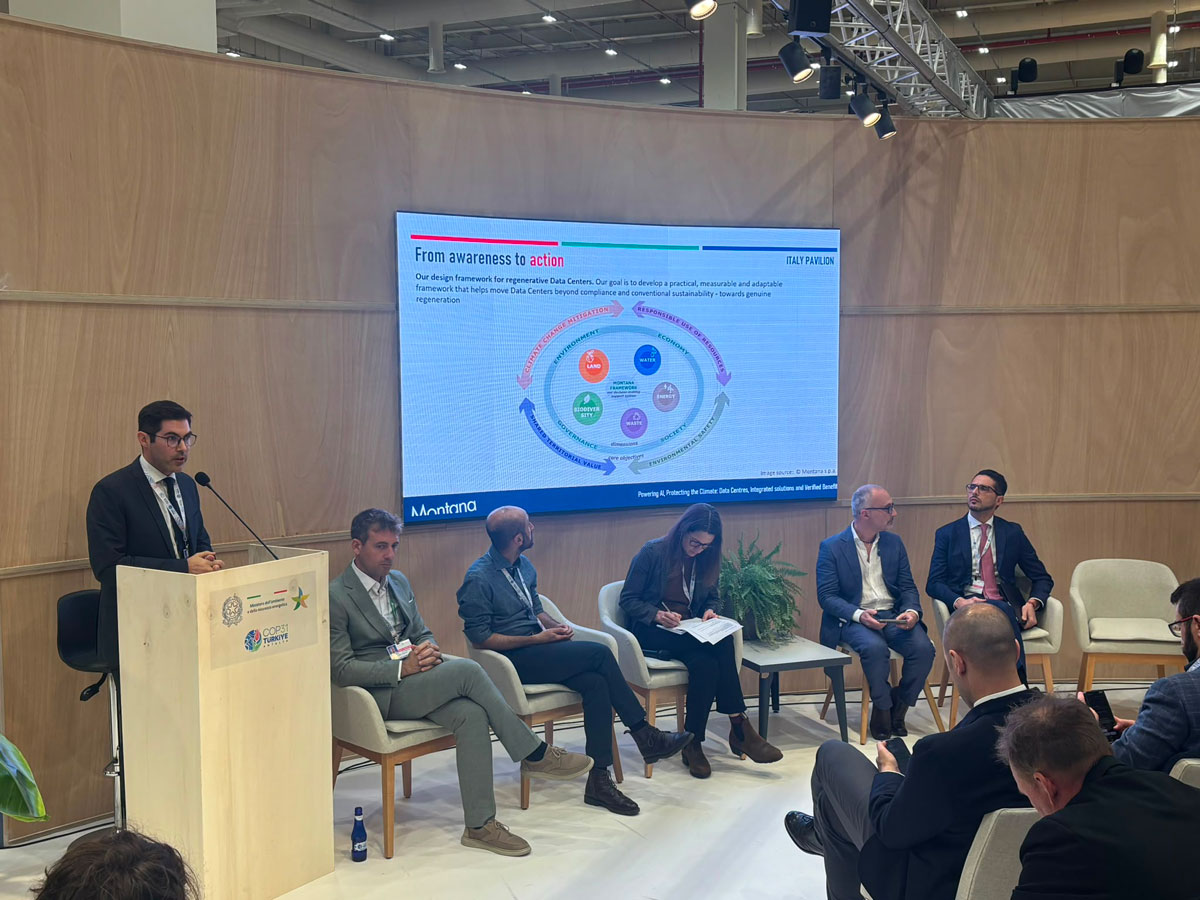
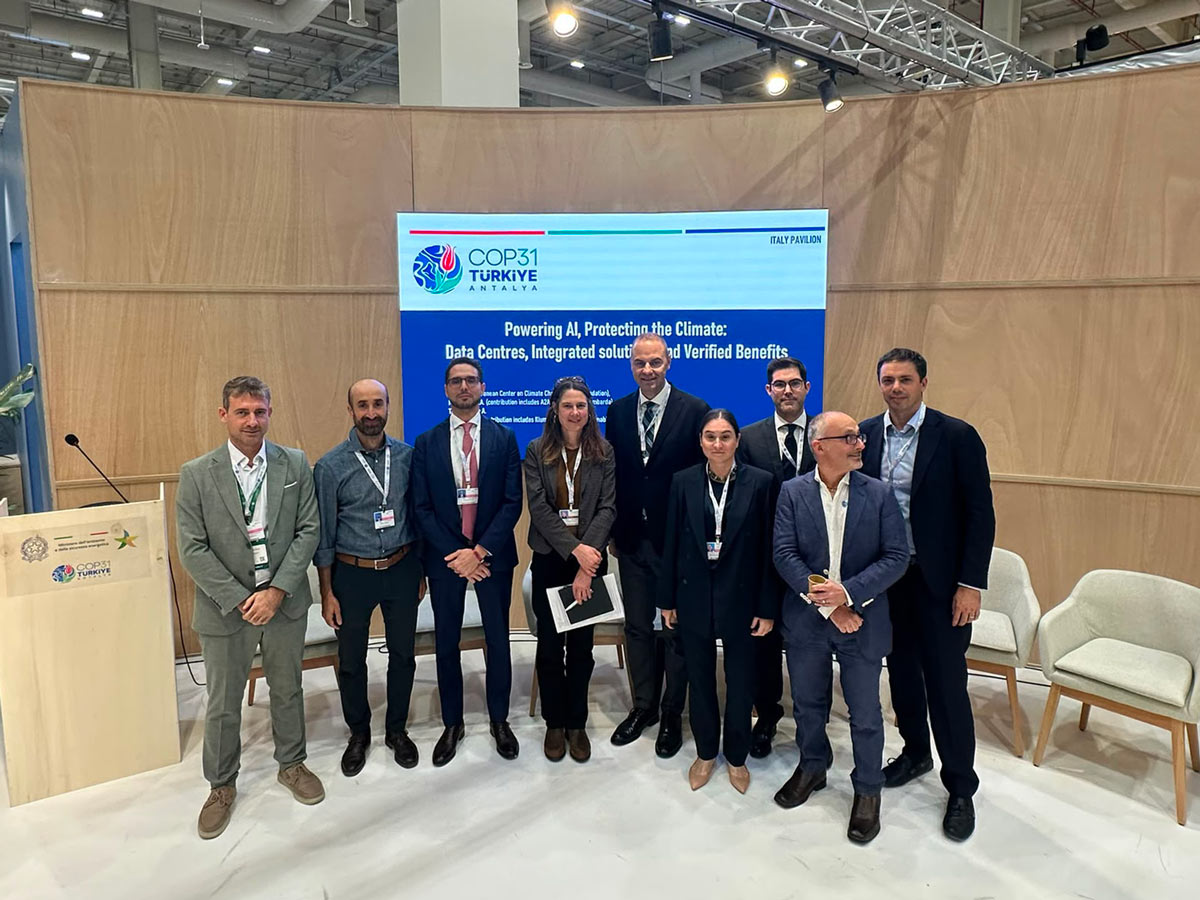
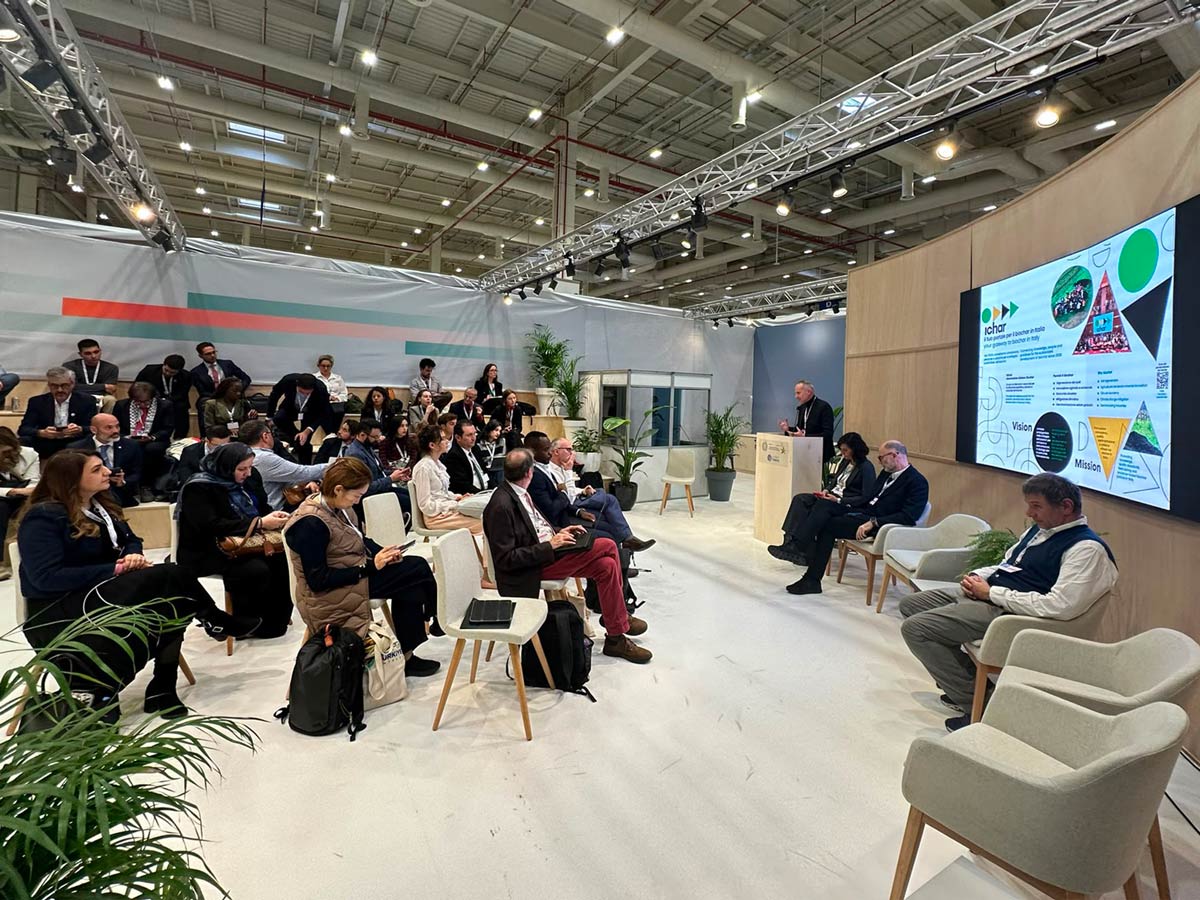
These issues were at the heart of the event “Powering AI, Protecting the Climate: Data Centres, Integrated Solutions and Verified Benefits”, held on 10 November at the Italy Pavilion at COP31.
Organised by Montana S.p.A., Fondazione CMCC – Centro Euro-Mediterraneo sui Cambiamenti Climatici, SDA Bocconi School of Management e Turboden, with contributions from A2A and Assolombarda, the event brought together scientific, industrial and design expertise to explore practical, replicable and verifiable solutions.
The discussion, moderated by Philippa Nuttall (Financial Times Sustainable Views), brought together perspectives on climate and energy scenarios, data centre development strategies, opportunities for heat recovery and industrial symbiosis, and the verification of environmental benefits.
Different yet complementary perspectives, all essential to understanding the scale of the challenge, identifying applicable solutions and demonstrating their results.

From Data Centre Efficiency to Territorial Sustainability
Data centres are essential infrastructure for the digital transition. However, their environmental performance cannot be assessed independently of the context in which they are developed.
A cooling strategy may reduce water consumption while affecting energy demand and heat dissipation methods. Heat recovery can create opportunities for nearby industries and communities, provided that local demand and adequate infrastructure are in place.
However, optimising individual components does not necessarily guarantee the best outcome for the system as a whole. Site selection and campus design must contribute to the regeneration of industrial areas, water management and climate resilience, while also generating social benefits.
The challenge is not to choose between the digital transition and the ecological transition, but to ensure that one does not come at the expense of the other.
Addressing this challenge requires energy, water, land, ecosystems and communities to be considered together, recognising how each decision can affect the others.
Collaboration between research institutions, industry, designers and public authorities is essential to bring together different areas of expertise and perspectives. Equally important is dialogue among all stakeholders involved throughout the entire data centre development value chain, in order to build a shared vision and ensure consistency across design and operational decisions.
Montana’s Contribution: A Framework for Regenerative Data Centres
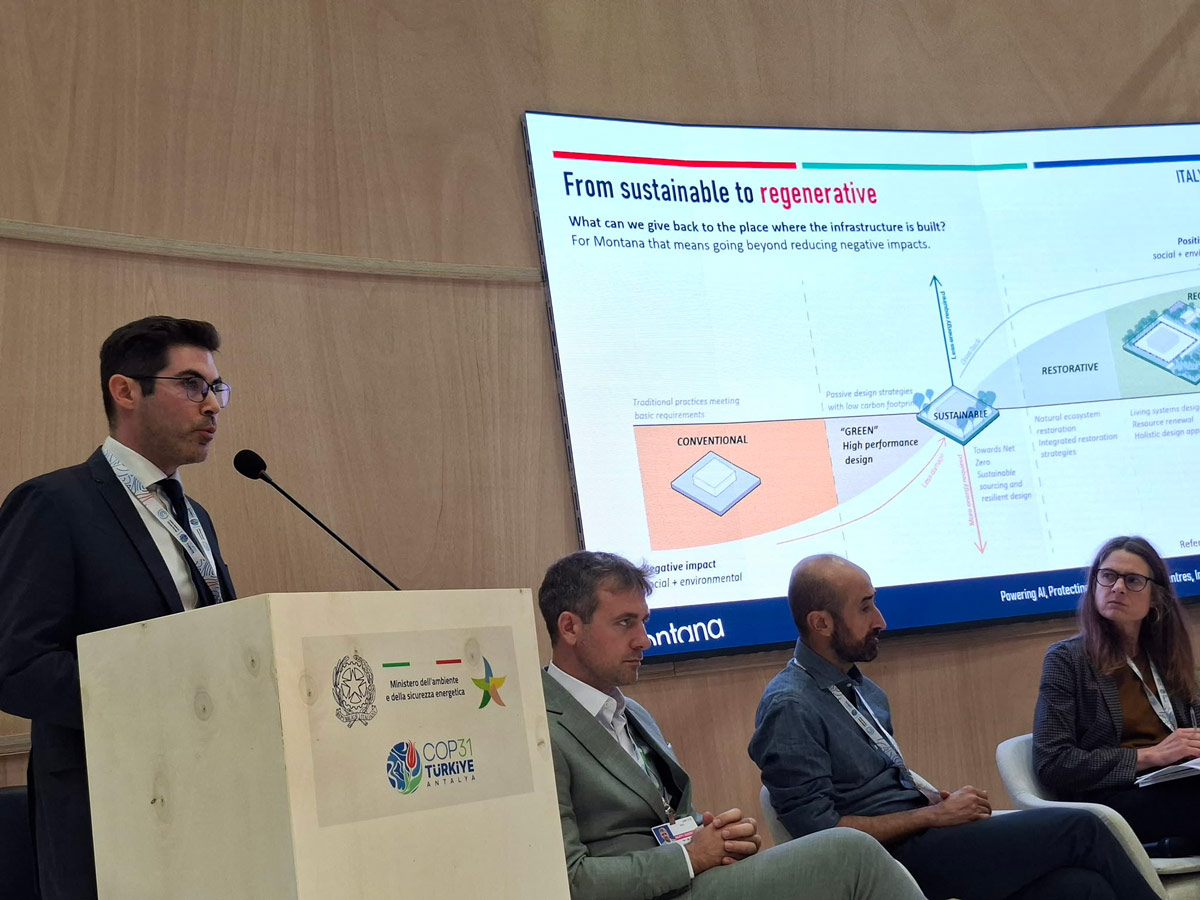
Against this backdrop, Montana brought its vision of Regenerative Data Centres to COP31 through a presentation by Fabio Lassini, Engineering and Design Services Director. This vision stems from the joint work of Montana’s multidisciplinary team, with contributions from Mariana Marchioni, Head of the NBS Lab.
The objective is to develop an approach that goes beyond reducing environmental impacts to identify tangible opportunities to create value for the territories in which data centres are located.
The framework builds on the integration of expertise developed across Montana’s different Business Units: from environmental remediation and industrial site regeneration to renewable energy, from industrial process and resource management to territorial planning and transformation.
This expertise is complemented by experience gained through major international projects such as Green Riyadh and CMP Expo 2030 Riyadh, to which Montana has contributed in its areas of specialisation, addressing environmental issues, water management, waste management and climate adaptation within large-scale masterplans.
Although these projects differ significantly from data centre developments, they share the need to connect infrastructure, natural resources and territorial systems. The lessons learned from these contexts, together with the expertise of the NBS Lab, provide a solid foundation for integrating Nature-Based Solutions, circular economy principles, resource recovery and industrial symbiosis into data centre design.
Site selection and masterplanning thus become strategic tools for embedding climate resilience, resource management, environmental regeneration and value creation for the local area into a project from the outset.
The framework Montana is developing aims to translate these experiences into a methodology that can be applied from the earliest stages of assessment and design, adapted to local conditions and focused on generating and verifying measurable benefits.
There is no one-size-fits-all model: a territory’s capacity to accommodate a data centre depends on available resources, existing infrastructure, environmental sensitivities and opportunities for integration with surrounding activities. These conditions guide design decisions and determine which benefits can realistically be achieved.
COP31 provides an opportunity to bring together different experiences and areas of expertise and explore how these opportunities can be translated into tangible results for local territories.
A data centre does not become regenerative by definition or through certification alone. It becomes regenerative through its design choices, the resources it is able to recover, the ecosystems it helps protect and the tangible benefits it can generate and demonstrate.